C3PAO vs RPO CMMC: The Two Partners Every Defense Contractor Needs — and Why Hiring the Wrong One First Is the Most Common Mistake
If you’re staring down a CMMC Level 2 deadline and trying to figure out who to hire first, the C3PAO-vs-RPO question is going to come up immediately. And the answer matters more than most contractors realize on day one.
Here’s what most contractors don’t know walking in: you need an RPO to prepare you for your C3PAO assessment. These aren’t competing options where you pick one. They’re two distinct partners performing two different jobs at two different points in your timeline. The RPO comes first — months before the assessment — to get your environment, documentation, and evidence ready. The C3PAO shows up at the end to formally evaluate the work and issue your certification.
Hire the wrong type of partner first, and you can spend six months and tens of thousands of dollars going down a path that leaves you no closer to certification. Worse, if you put the wrong firm in the wrong role, you may find yourself locked out of using your preferred assessor entirely — because the conflict-of-interest rules are not negotiable.
The short version:
- An RPO (Registered Provider Organization) is your consultant. They help you get ready.
- A C3PAO (Certified Third-Party Assessment Organization) is your auditor. They conduct the formal assessment.
- By CyberAB rule, the same firm cannot do both for you on the same engagement.
Almost every contractor going for CMMC Level 2 needs both — in that order.
What an RPO Actually Is
A Registered Provider Organization is a consulting firm authorized by the Cyber AB to provide pre-assessment readiness services to defense contractors. RPOs employ at least one Registered Practitioner (RP) and may also employ Registered Practitioner Advanced (RPA) consultants who have demonstrated experience implementing 50+ CMMC Level 2 controls.
What an RPO actually does for you:
- Runs the gap assessment against NIST SP 800-171
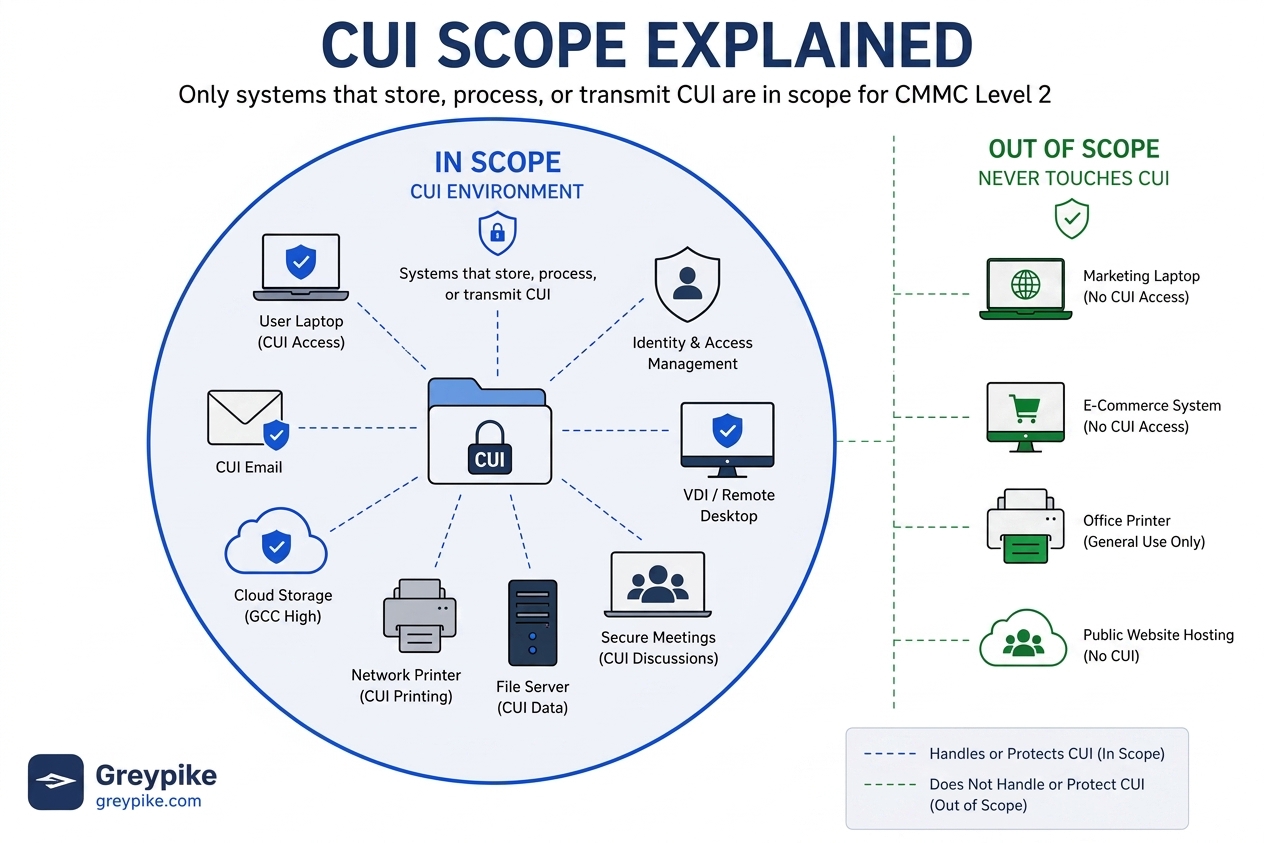
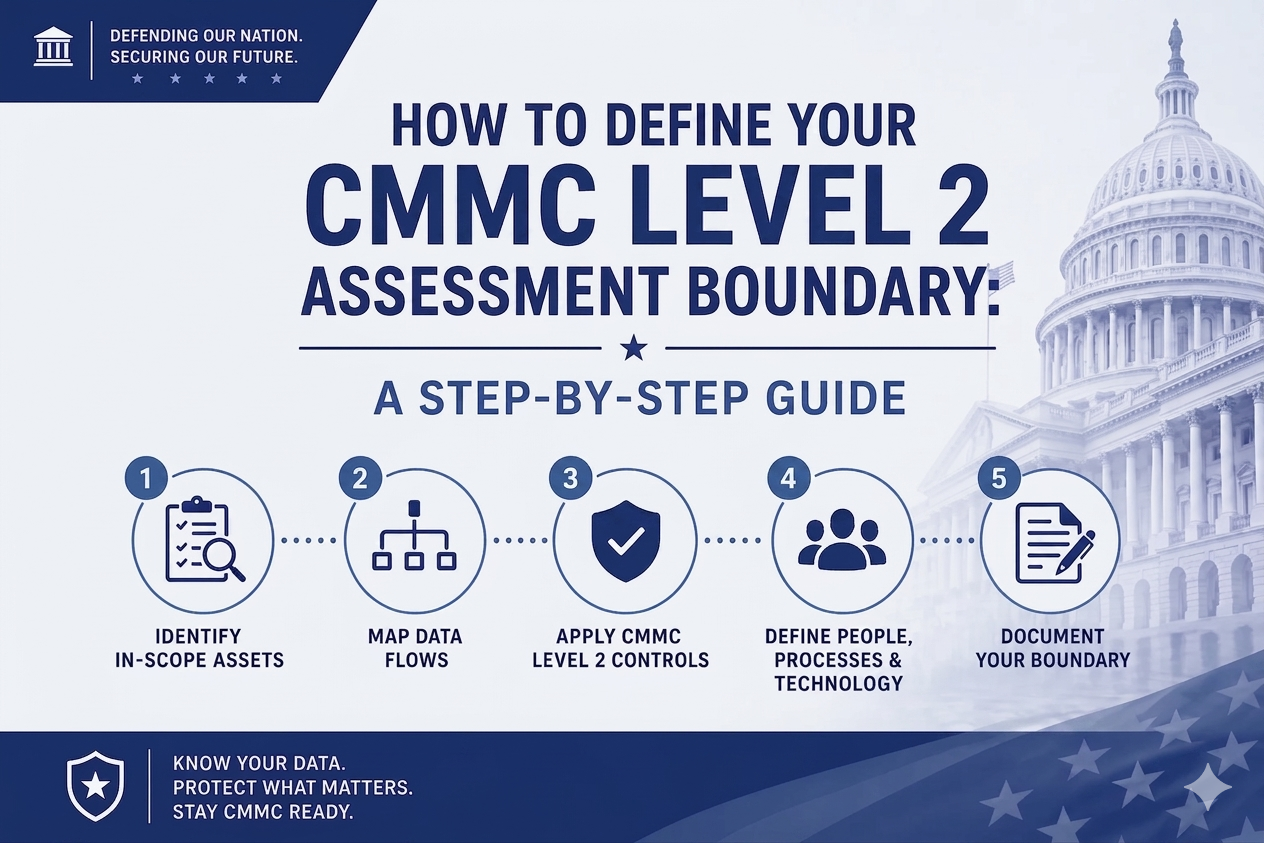
- Helps you scope your CUI environment and define your assessment boundary
- Drafts your System Security Plan, policies, and procedures
- Recommends technology and architecture choices (enclave, GCC High, GovCloud, MFA, SIEM, EDR)
- Implements technical controls or coordinates with your MSP/IT team
- Conducts mock assessments before the C3PAO arrives
- Provides ongoing managed compliance after certification
In short, an RPO does the work. They sit on your side of the table, find your gaps, fix them, and prepare evidence the assessor will eventually examine. They are advocates for your success.
What an RPO cannot do: issue your CMMC certification. The official assessment must be performed by a different organization — a C3PAO.
What a C3PAO Actually Is
A Certified Third-Party Assessment Organization is the only type of firm authorized to conduct official CMMC Level 2 assessments. C3PAOs are accredited by the Cyber AB after passing their own DIBCAC Level 2 audit, going through background checks, carrying specific insurance policies, and paying annual accreditation fees.
C3PAOs employ CMMC Certified Assessors (CCAs) — the individuals who actually perform the assessment — along with CMMC Certified Professionals (CCPs) who can support assessment activities but cannot make final determinations.
What a C3PAO actually does:
- Performs the formal Level 2 assessment against all 110 NIST SP 800-171 controls
- Reviews your evidence, interviews your staff, observes your processes
- Determines whether each control is Met, Not Met, or Not Applicable
- Submits results to the Cyber AB for certification issuance
- Conducts your closeout assessment if you achieve Conditional status with a POA&M
What a C3PAO cannot do: tell you how to fix what’s broken, recommend products, write your SSP, or implement controls. They identify gaps. They don’t close them. That’s the RPO’s job.
As of early 2026, there are roughly 97 authorized C3PAOs in the entire country. Demand is far outstripping supply, which is why scheduling your assessment 9 to 12 months ahead is the working norm.
The Conflict of Interest Rule (and Why It Exists)
The rule that catches most contractors off guard: a C3PAO cannot perform consulting and assessment services for the same client. Even if a single firm holds both RPO and C3PAO designations from the Cyber AB — and several do — they have to firewall the two functions. The team that helps you get ready cannot be the team that grades you.
The reasoning is straightforward. If the same people who built your SSP and configured your controls also conduct the assessment, the assessment isn’t independent. The assessor has a financial incentive to find their own work compliant. The integrity of CMMC depends on that separation, and the Cyber AB enforces it strictly.
The practical consequence: hire an RPO that also holds C3PAO accreditation, and you’ve removed that firm from the list of organizations that can certify you. With only 97 C3PAOs in the country, that math gets tight fast — especially in defense corridor states where wait times are already 12+ months out.
When You Need Each One
The order of operations is fixed:
Months 1–12: RPO territory. Gap assessment, scoping, architecture decisions, control implementation, documentation, evidence collection, mock assessments. This is where the heavy lifting happens — and where the vast majority of your CMMC budget goes. RPO engagements typically run 6 to 24 months depending on where you started.
Months 12–14: C3PAO territory. Once your environment is genuinely ready and you’ve passed an honest internal readiness review, you bring in the C3PAO for the formal assessment. The assessment itself usually takes a few weeks to a couple of months.
Years 2–3: RPO again for ongoing managed compliance, annual affirmations, drift monitoring, evidence refresh, and recertification preparation. Year 3: C3PAO recertification.
The trap contractors fall into is reversing this order — calling a C3PAO first because that’s the firm that does “the real audit.” The C3PAO’s response is universally to send you back to find an RPO, because they cannot legally help you get ready and then assess you. You’ve just lost weeks chasing the wrong door.
Not Sure Where You Stand or Who to Call First?
Greypike offers a free 30-minute scoping session for defense contractors trying to figure out their CMMC Level 2 path. We’ll walk through your contracts, your CUI handling, your existing security posture, and your timeline — and tell you honestly whether your next call should be to an RPO, a C3PAO, or both, and in what order.
No obligation, no pitch. Just a clear answer to the question you’re already trying to figure out on your own.
How to Pick a Good RPO
The RPO market is uneven. Some firms are excellent. Others have an RP credential and a website. Questions worth asking before you sign:
- How many CMMC Level 2 engagements have they completed — with the client successfully certified?
- Do they have direct experience with your environment type? Manufacturing, engineering, software, services — these have different control implementation realities.
- Hands-on experience with GCC High, GovCloud, or compliant VDI? Or are they purely a documentation shop?
- What’s their relationship with C3PAOs? Good RPOs sit on the same side of the table as the C3PAO during scoping.
- Are they offering managed compliance services after certification, or do they vanish at the finish line?
The cheapest RPO almost always turns into the most expensive RPO when assessment day reveals the gaps they didn’t catch. 15–35% of first-time C3PAO assessments fail. The biggest predictor is the quality of the RPO work that came before.
How to Pick a Good C3PAO
When you’re 6 to 9 months from assessment, start the C3PAO conversation:
- Are they currently authorized in the Cyber AB Marketplace? Authorization status changes — verify before committing.
- Do they have experience with your environment type?
- What’s their scheduling availability? If they can fit you in next month, that’s a flag, not a feature — good C3PAOs are booked.
- Do they provide a clear, written scoping document up front? Vague scoping leads to “found assets” mid-assessment.
- What’s their pass rate, if they’ll share it? Reputable C3PAOs would rather postpone than fail a client who isn’t ready.
Be wary of any firm that offers to both prepare you and assess you, that guarantees certification outcomes, or that quotes prices well below the $35K–$75K small-enclave market range. All three are warning signs.
Frequently Asked Questions
Can the same firm be both my RPO and my C3PAO?
Not on the same engagement. A firm can hold both Cyber AB designations, but they cannot consult on your readiness and then assess you. Hire a firm as your RPO and they’re removed from your C3PAO options.
Do I have to use an RPO at all?
No. RPO authorization is voluntary, and plenty of qualified consultants and MSPs help contractors prepare for CMMC without holding the credential. The credential is a quality signal, not a legal requirement. The C3PAO assessment, on the other hand, is mandatory for Level 2.
How much does an RPO engagement cost compared to a C3PAO?
RPO readiness work typically runs $40,000–$120,000 for a small contractor across 6–18 months. The C3PAO assessment itself runs $35,000–$75,000 for a clean enclave scope. The RPO side is where most of your CMMC spending lands.
Helpful Articles & Information
- What Is CMMC Phase 2 and Does It Affect Your DoD Contract?
- What Is a CMMC Assessment Boundary?
- CUI vs FCI: Which of Your Systems Need to Be CMMC-Certified?
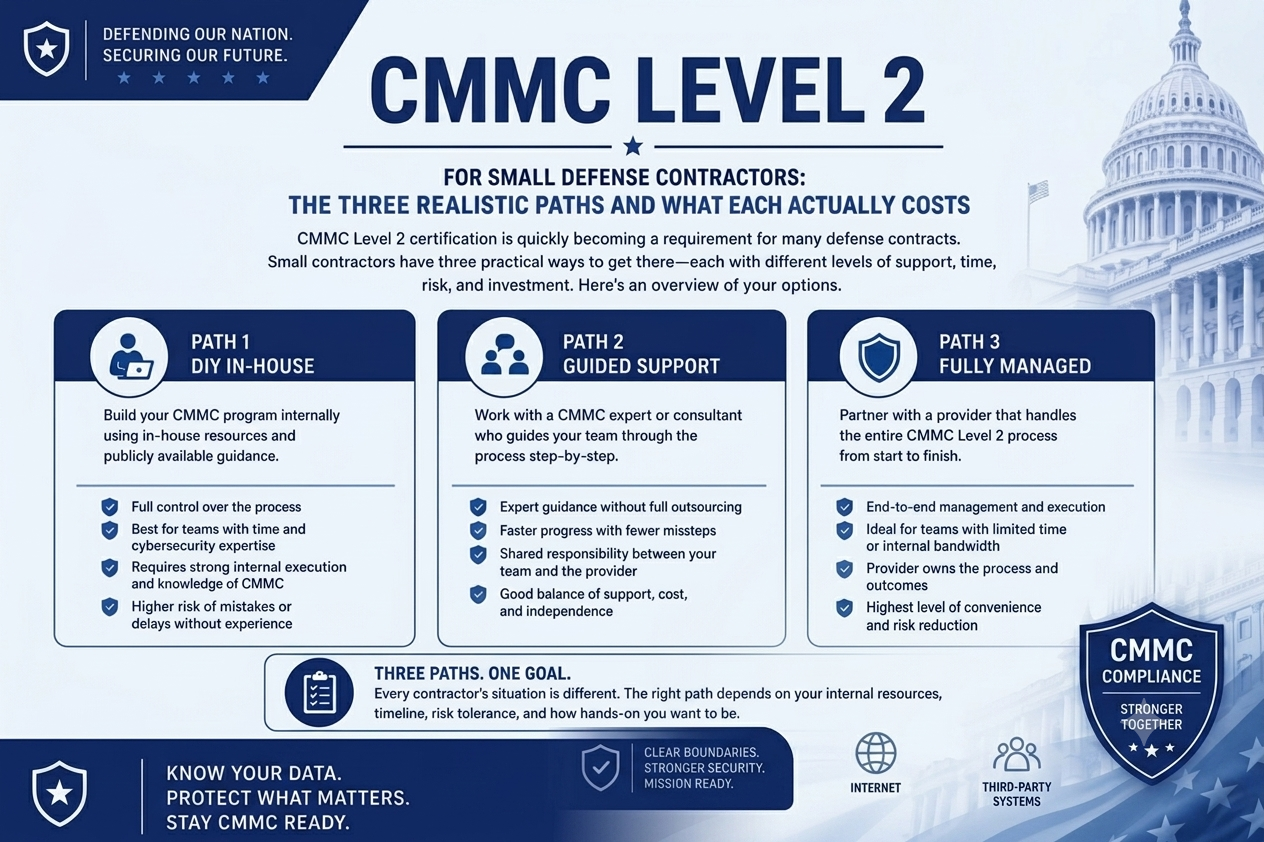
- CMMC Level 2 Small Business Cost: The Three Realistic Paths
- Greypike CMMC Compliance Services
- Cyber AB Marketplace — Find Authorized C3PAOs and RPOs
- DoD CMMC Official Program Page
- 32 CFR Part 170 — CMMC Program Final Rule
- NIST SP 800-171 Rev. 2
- DFARS 252.204-7021 Contract Clause
How Greypike Helps GovCons Navigate the RPO–C3PAO Process
Greypike works with small and mid-sized Defense Industrial Base contractors on CMMC readiness every day. We sit on the RPO side of the table — by design. Our job is to get your environment, evidence, and team genuinely ready for the C3PAO that will eventually walk through your door, not to grade our own homework.
We help contractors run honest gap assessments, design enclave architectures that contain costs, build SSPs that survive scrutiny, and run mock assessments against the same evidence standard a C3PAO will apply. Our GreypikeEnclave service deploys a hardened, CUI-compliant VDI environment on Google or Microsoft government clouds. Obolix keeps every asset, control, and piece of evidence mapped to the boundary you defined — so when the C3PAO arrives, the work is done.
If you’re trying to figure out who to call first, the answer is almost always: an RPO.
Visit greypike.com or call (703) 214-9246.
Greypike Inc. — Veteran-Owned. Mission-Focused. Compliance-Ready.